


I didn’t clock it right away.
Not because the signs weren’t there — but because they felt… familiar.
The constant movement. The questions layered on top of questions. The emotional whiplash. The way excitement and overwhelm lived in the same body, at the same time. The way rest looked suspiciously like chaos.
I wasn’t seeing a problem.
I was seeing myself.
When your child feels like a mirror
I was diagnosed with ADHD as an adult — late enough that I’d already built a life around coping instead of support. Late enough that I’d internalized the story that I was just “a bit much,” dramatic, inconsistent, too sensitive, too intense.
So when I started wondering whether my child might have ADHD too, it didn’t come with panic.
It came with recognition.
And honestly? A strange sense of relief.
Because I know what it’s like to grow up feeling misunderstood by the systems meant to help you.
And I also know how different things could have been if someone had said:
Your brain isn’t broken. It’s just busy.
Suspected ADHD lives in the gray
If you’re parenting a child with suspected ADHD, you’re probably living in a lot of in‑between space.
Not enough certainty for labels.
Too much evidence to ignore.
You might hear things like:
- “They’re too young.”
- “Let’s wait and see.”
- “That’s just normal kid behavior.”
And maybe some days it is.
But other days, you’re not just dealing with energy or curiosity — you’re supporting a nervous system that’s working overtime.
As an ADHD parent, this can hit especially close to home.
Because you’re not just holding space for your child’s emotions.
You’re also holding space for your own younger self — the one who didn’t have language, understanding, or gentleness.
That’s a lot.
The quiet re‑parenting no one talks about
Raising a child with a busy brain while having one yourself often turns into accidental re‑parenting.
You notice things you were punished for.
You advocate in moments you were dismissed.
You pause where you were once rushed.
And sometimes, you grieve.
Not because your child is struggling — but because you realize how hard it was for you.
That grief doesn’t mean you’re doing it wrong.
It means you’re doing it consciously.

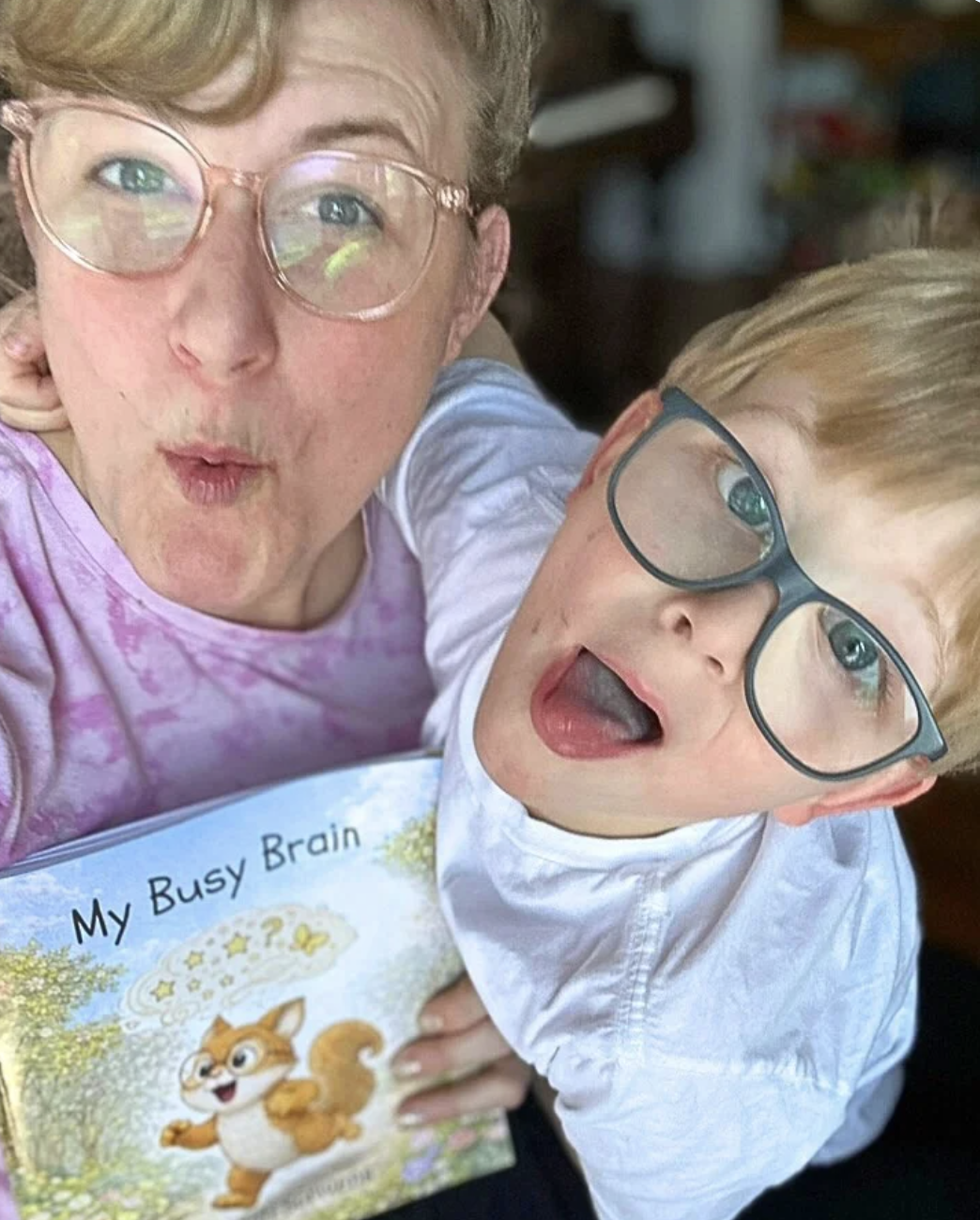
Why I wrote My Busy Brain
My Busy Brain isn’t about fixing kids.
It’s not about labels or diagnoses or productivity.
It’s about normalizing the experience of having a brain that never really slows down.
A brain that feels deeply.
Moves quickly.
Notices everything.
It’s for kids who feel like their thoughts race ahead of their bodies.
And for parents who want to say:
“I see you — and you’re not alone in this.”

Representation matters — especially early
When kids see themselves reflected in stories, it changes the story they tell themselves.
Instead of:
Why can’t I be like everyone else?
They get:
Oh. Other kids are like this too.
Instead of:
Something is wrong with me.
They get:
My brain just works differently.
That shift is small — and enormous.
If you’re in this season too
If you’re raising a child with a suspected busy brain while unpacking your own late diagnosis, here’s what I want you to hear:
You don’t need to have it all figured out.
You don’t need perfect routines or perfect regulation.
What your child needs most is a parent who believes them.
And the fact that you’re noticing — questioning — learning — already tells me you’re doing that.
My Busy Brain is one small tool in a much bigger conversation.
A conversation about compassion.
About nervous systems.
About letting kids be who they are without shrinking them to fit the room.
And maybe — quietly — letting ourselves do the same.

My Busy Brain is now available for families who want language, gentleness, and representation for busy‑brained kids.
Because no child should grow up thinking their mind is a problem.
And no parent should feel alone while learning this in real time.


